Quality is the foundation of everything we do. This article provides an inside look at our comprehensive quality management system and testing capabilities that ensure every product meets the highest standards of purity, performance, and consistency.

ISO 9001:2015 Certified Quality Management System
Our quality management system is certified to ISO 9001:2015 standards by SGS, encompassing comprehensive procedures for:
- Document Control: Version-controlled SOPs (Standard Operating Procedures) for all processes, with mandatory review cycles every 2 years
- Corrective and Preventive Actions (CAPA): Systematic root cause analysis using 5-Why and Fishbone methodologies, with effectiveness verification
- Internal Audit Program: Annual audit schedule covering all departments, with findings tracked to closure through our QMS software
- Management Review: Quarterly executive reviews of quality KPIs, customer feedback, and continuous improvement initiatives
- Supplier Quality Management: Approved supplier list with annual performance evaluations and on-site audits for critical raw materials
Quality Certifications and Accreditations
- ✓ ISO 9001:2015 - Quality Management Systems (Certificate No.: CN18/32156)
- ✓ ISO 14001:2015 - Environmental Management Systems
- ✓ ISO 45001:2018 - Occupational Health and Safety Management
- ✓ EU REACH Compliance - Registration completed for all exported substances
- ✓ FDA Drug Master File (DMF) - Type III DMF #35892 on file for pharmaceutical grade products
Comprehensive Incoming Raw Material Inspection
Quality control begins before production starts. Every incoming raw material shipment undergoes rigorous inspection:
Raw Material Testing Protocol
| Material | Tests Performed | Acceptance Criteria | Frequency |
|---|---|---|---|
| Terephthalic Acid (TPA) | Purity (HPLC), Moisture (KF), Color (APHA), Particle Size Distribution | ≥99.9%, ≤0.1%, ≤10, D50: 80-120 μm | Every lot |
| 2-Ethylhexanol | Purity (GC), Water Content, Acidity, Distillation Range | ≥99.5%, ≤0.1%, ≤0.01%, 183-185°C | Every lot |
| Titanium Catalyst | Ti Content (ICP-OES), Density, Viscosity, Activity Test | 98.5±0.5%, 0.96 g/cm³, 45-55 cSt, Standardized | Every lot |
In-Process Quality Control
During production, our QC team monitors critical process parameters and intermediate product quality:
- Hourly Checks: Reaction temperature, pressure, vacuum level, nitrogen flow rate (all logged in DCS system)
- 4-Hour Sampling: Acid value, ester content, moisture content (rapid test methods)
- Batch Completion Testing: Full physical and chemical analysis before transfer to finishing stage
- Statistical Process Control (SPC): Control charts (X-bar and R charts) track key parameters, with automatic alerts for out-of-control conditions
Finished Product Testing
Every batch of finished product must pass all quality tests before release for shipment. Our comprehensive testing protocol includes:
Physical Properties Testing
- Appearance and Color: Visual inspection against color standards; APHA color per ASTM D1209 (Specification: ≤30)
- Density and Specific Gravity: Digital densitometer at 20°C per ASTM D4052 (Specification: 0.983-0.987 g/cm³)
- Viscosity: Rotational viscometer at 25°C per ISO 2555 (Typical: 18-22 mPa·s for DOTP)
- Flash Point: Pensky-Martens closed cup method per ISO 2592 (Specification: ≥200°C)
- Refractive Index: Abbe refractometer at 20°C per ASTM D1218 (Specification: 1.486-1.488)
Chemical Analysis
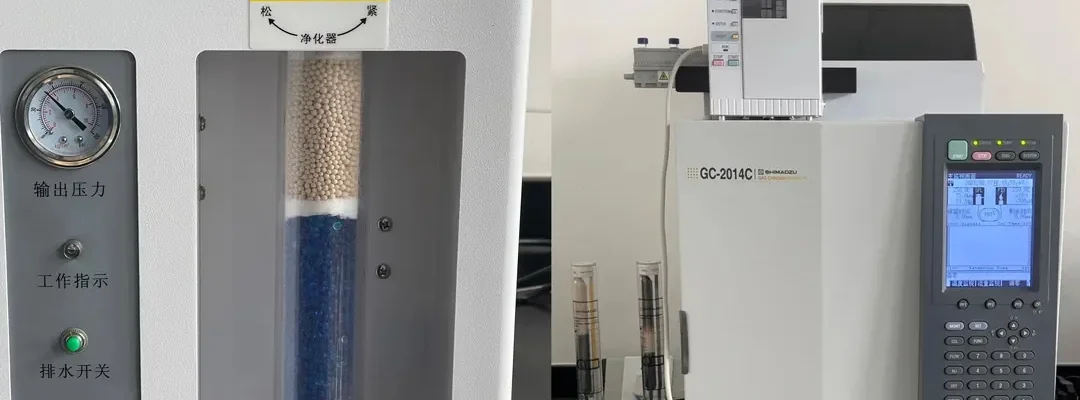
- Assay and Purity Determination: Gas chromatography (GC) with FID detector per ASTM D5208 (Specification: ≥99.5% ester content)
- Acid Value: Potentiometric titration per ASTM D974 (Specification: ≤0.1 mg KOH/g)
- Moisture Content: Karl Fischer volumetric titration per ASTM E203 (Specification: ≤0.10%)
- Impurity Profiling: GC-MS identification of trace impurities down to 10 ppm detection limit
- Residual Monomers: Head space GC analysis for residual 2-ethylhexanol (<500 ppm)
- Heavy Metals Screening: ICP-OES analysis for Pb, Cd, Hg, Cr(VI) per EPA Method 200.7 (each <1 ppm)
Performance Testing (Application-Specific)
- Plasticization Efficiency: PVC dough testing for torque rheometer measurements
- Low-Temperature Flexibility: Mandrel bend test at -40°C per ASTM D522
- Volatility Loss: Weight loss after heating at 100°C for 24 hours (<1.5%)
- Electrical Properties: Volume resistivity per ASTM D257 (>1×10¹⁴ Ω·cm)
- Compatibility Studies: Cloud point determination with various PVC resins
State-of-the-Art Laboratory Capabilities
Our 800 m² quality control laboratory houses sophisticated analytical instrumentation:
Chromatography Systems
- • Agilent 8860 GC with FID/TCD detectors
- • Agilent 1260 Infinity II HPLC system
- • Shimadzu GC-MS QP2020 NX
- • Metrohm 930 IC ion chromatograph
Spectroscopy Equipment
- • PerkinElmer Frontier FTIR spectrometer
- • Agilent 5800 ICP-OES (vertical dual view)
- • Shimadzu UV-2600i UV-Vis spectrophotometer
- • Bruker M4 TORNADO XRF analyzer
Thermal Analysis
- • TA Instruments DSC 2500
- • METTLER TOLEDO TGA/DSC 3+
- • Anton Paar MCR 302 rheometer
Physical Testing
- • METTLER TOLEDO V20 Karl Fischer titrator
- • Rudolph Research Analytical DDM2911 densitometer
- • BYK Gardner Hazegard Plus colorimeter
- • Brookfield DV2T viscometer
Quality Documentation and Traceability
Every product shipment includes comprehensive documentation:
- Certificate of Analysis (CoA): Actual test results for all specification parameters, signed by QC Manager
- Batch Production Record: Complete traceability from raw material lot numbers through final product testing
- Safety Data Sheet (SDS): Compliant with GHS Rev.9 and OSHA HCS 2012 requirements
- Statement of Compliance: Confirmation of REACH, RoHS, and Proposition 65 compliance (upon request)
Continuous Improvement Culture
Our quality journey doesn't end with certification. We actively pursue excellence through Lean Six Sigma methodologies, with 3 Green Belt projects completed in 2025, resulting in 28% reduction in customer complaints and 15% improvement in first-pass yield. Customer satisfaction is measured through annual surveys (NPS score: 72 in 2025), and we maintain a 24-hour response time for all quality-related inquiries.